ADHD and anxiety can be difficult to separate because they often show up in the same places.
You can't get started on something important. You procrastinate until the pressure becomes unbearable. You're overwhelmed by everything you need to do, then become anxious because you're falling behind.
So which one is actually causing the problem?
Sometimes it's ADHD. Sometimes it's anxiety. Very often, both are involved.
This distinction matters because I've seen people spend years assuming every problem they have comes from ADHD when anxiety is playing a major role. I've also seen the reverse. Someone thinks they're procrastinating because they're anxious, but the problem started with ADHD-related difficulty organizing the task or getting themselves to begin.
Understanding what is happening underneath the behavior can help you figure out what actually needs to change.
ADHD and Anxiety Often Occur Together
Anxiety is common among adults with ADHD. Research consistently finds much higher rates of anxiety disorders in adults with ADHD than in adults without it.
The relationship isn't always simple.
ADHD can create problems that eventually make you anxious. Anxiety can also make existing ADHD symptoms harder to manage.
Imagine repeatedly forgetting things at work.
After enough mistakes, you might start worrying constantly about forgetting something else. Now you're checking your email over and over because you don't trust yourself.
The original problem may have been related to ADHD. The anxiety developed around it.
Eventually, they're feeding each other.
ADHD vs. Anxiety: Why They Can Look So Similar
Both ADHD and anxiety can make it difficult to concentrate.
Both can lead to procrastination.
Both can leave you feeling overwhelmed by things other people seem to handle without much trouble.
But similar behavior doesn't always mean the same thing is happening underneath it.
Take procrastination.
Someone with ADHD might sit down to answer an email and genuinely want to do it. They know what needs to happen, but they can't seem to organize their thoughts or get themselves started.
Someone dealing primarily with anxiety might be perfectly capable of writing the email but keeps avoiding it because they're worried about how the other person will respond.
From the outside, both people are procrastinating.
Internally, they're having very different experiences.
Ask Yourself: “Why Am I Not Starting?”
This is one of the questions I use when trying to understand what is keeping someone stuck.
Don't stop at:
“I'm procrastinating.”
That's a description of the behavior. It doesn't tell us much about why it's happening.
Instead, pay attention to what happens when you actually try to begin.
Do you look at the task and have trouble figuring out where to start?
That can point more toward ADHD-related executive functioning difficulties.
Do you know exactly what to do, but notice yourself avoiding it because you're worried about doing it badly?
Anxiety may be playing a bigger role.
Sometimes you'll notice both.
You don't know where to start, so you put the task off. Then you fall behind. Now the consequences feel bigger, which makes you anxious about starting.
This is how ADHD and anxiety can turn into a cycle.
How ADHD Can Lead to Anxiety
Living with ADHD can create a lot of experiences that make anxiety understandable.
Maybe you've forgotten important deadlines before.
Maybe you underestimate how long things will take and end up rushing at the last minute.
After this happens enough times, you can start losing confidence in yourself.
You don't just think, I need to remember this appointment.
You think, I need to make absolutely sure I don't screw this up again.
That can lead to checking things repeatedly or overpreparing because you don't trust yourself to handle the situation otherwise.
In this case, the anxiety isn't appearing out of nowhere. It has developed partly in response to real experiences you've had managing ADHD.
How Anxiety Can Make ADHD Feel Worse
The cycle can also move in the other direction.
When you're anxious, part of your attention gets pulled toward whatever you're worried about.
Now you're trying to complete a task while another part of your mind is running through everything that could go wrong.
If you already struggle with attention or working memory because of ADHD, that extra mental load can make things harder.
You lose your place.
You reread the same thing.
You jump between tasks because you're overwhelmed.
Then you become frustrated that you aren't getting anything done.
That frustration creates more anxiety.
This is why it isn't always useful to ask whether ADHD or anxiety is the problem. Sometimes the more useful question is how they're interacting.
ADHD Overwhelm vs. Anxiety Avoidance
Another distinction I pay attention to is what someone means when they say they're “overwhelmed.”
With ADHD, overwhelm can come from difficulty organizing too much information at once.
You look at a project and see twenty different things that need to happen. You don't know what should come first, so you don't start any of them.
Anxiety-driven avoidance feels different.
You may know what the next step is, but taking it brings you closer to something you're afraid of.
Maybe submitting the application means you could get rejected.
Maybe starting the project means eventually finding out whether your work is good enough.
Avoiding it gives you temporary relief.
That relief matters because it can teach your brain to keep avoiding the task the next time the anxiety shows up.
Perfectionism Can Blur the Line Even More
Perfectionism is another place where ADHD and anxiety can become tangled together.
Some people with ADHD develop extremely high standards because they're trying to compensate for years of forgetting things or making mistakes.
If you've learned that things tend to go wrong when you're not paying close attention, being incredibly careful can feel necessary.
Then the strategy becomes its own problem.
You spend too long on relatively small decisions. You have trouble finishing because something never feels good enough.
At that point, simply working on organization may not solve the whole problem.
You may also need to become more comfortable doing something without knowing exactly how it will turn out.
This pattern can be especially easy to miss in women with ADHD who have spent years compensating for their symptoms.
Emotional Reactions Can Be Part of the Picture
ADHD isn't only about attention.
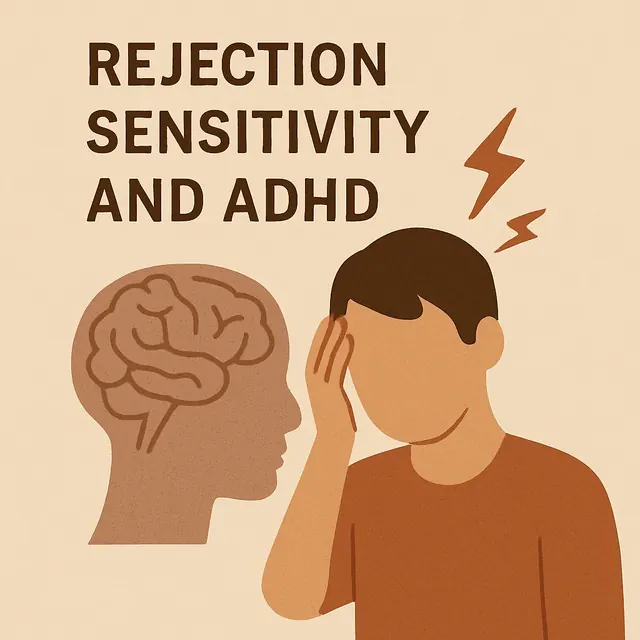
Many adults I work with also struggle with strong emotional reactions. Criticism can hit hard. A small setback can completely derail the rest of the day.
This becomes especially important when someone is already anxious about rejection or failure.
You might avoid asking a question because you're worried you'll look stupid.
You might spend hours thinking about a short comment someone made at work.
Sometimes people describe this as rejection sensitivity. Whatever label you use, the important part is understanding what happens afterward.
Does the emotional reaction pass, or does it change your behavior?
Do you withdraw?
Do you start avoiding situations where you might receive criticism again?
That's where anxiety can begin building around the emotional response.
What If You Have Both ADHD and Anxiety?
You don't necessarily need to decide that every behavior belongs entirely to ADHD or entirely to anxiety.
Instead, get more specific.
If you're avoiding something, ask yourself what would make the task easier to start.
Would breaking it into a much smaller first step help?
That suggests task initiation may be a major part of the problem.
Would you still avoid that smaller step because you're afraid of what might happen?
Now anxiety probably deserves more attention.
The answer changes what you work on.
If the problem is primarily ADHD-related, you may need more external structure or a clearer starting point.
If anxiety is driving the avoidance, creating an even better organizational system may not solve it. You can have the perfect to-do list and still avoid the first item because it scares you.
At that point, the work is learning to take action while some anxiety is still there.
What About Medication?
Medication can be an important part of ADHD treatment for some people, and anxiety may require its own treatment as well. Those decisions belong with a qualified medical professional who can evaluate your symptoms and history.
What I care about in coaching is what happens in your day-to-day life.
Where do you consistently get stuck?
What happens right before you avoid something?
What makes you finally start?
Those patterns often tell us much more than simply saying, “I procrastinate because I have ADHD.”
Start With the Pattern, Not the Label
If you have ADHD and anxiety, you don't need to analyze every difficult moment until you've figured out which condition deserves credit for it.
Look at what is actually happening.
Maybe you need help getting started.
Maybe you know exactly what to do and you're scared to do it.
Sometimes the ADHD creates the problem and anxiety grows around it. Other times anxiety makes an existing ADHD difficulty much harder to manage.
Once you can see the pattern, you have something concrete to work with.
The goal isn't to perfectly separate ADHD from anxiety.
It's to understand what's keeping you stuck well enough to start doing something different.