Rumination Is Not a Personality Flaw
A lot of people think their tendency to overthink is just who they are.
They say, I’m just analytical. I’ve always been a deep thinker. That’s just my personality.
Sometimes that’s true.
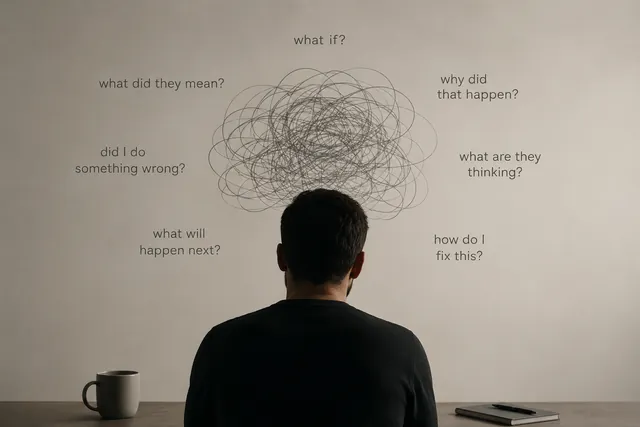
But often, rumination is not a personality trait. It is a trauma response.
When someone grows up in an environment where expressing emotion is not safe, where connection feels unstable, and where healthy outlets are shamed or dismissed, the mind becomes the safest place to retreat.
If you cannot act freely, speak freely, or feel freely, you think.
Thinking becomes control. Analysis becomes protection. Intellectualizing becomes distance from pain.
Over time, that coping strategy solidifies. It stops being situational and becomes habitual.
Especially during depression, rumination feels productive. The mind convinces you that if you just think long enough, analyze deeply enough, or find the right insight, relief will come.
So you dissect everything.
Life. Suffering. Your past. Your relationships. Your mistakes.
Hours pass.
It feels meaningful. It feels like progress. But often it just reinforces the weight.
If depression has been present since childhood and there was little ability to change the environment, rumination makes sense. It was adaptive. It was protective. It was the only option available.
When you cannot change your circumstances, you try to change your understanding of them.
That strategy can keep you afloat.
But what once protected you can eventually confine you.
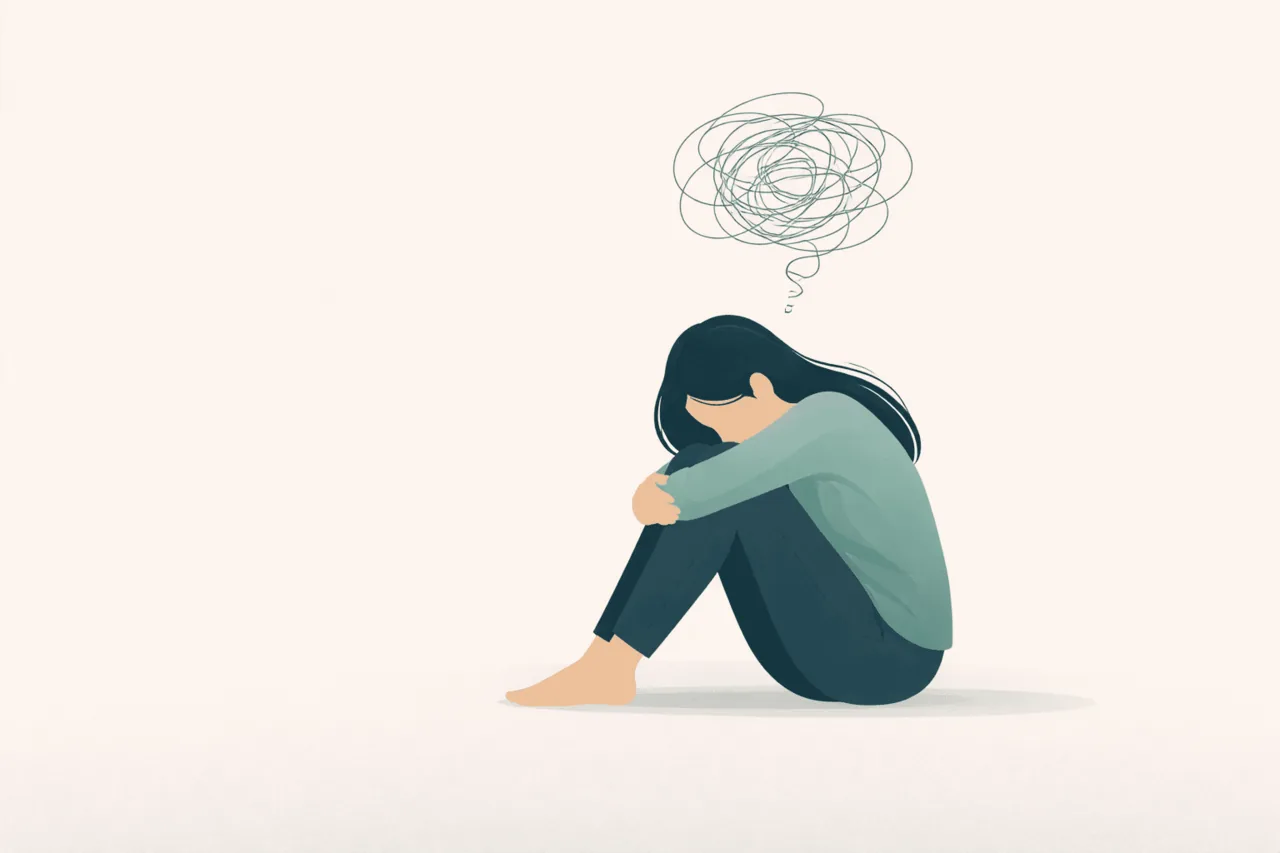
At some point, thinking becomes a closed loop. You are not processing. You are circling.
The nervous system does not heal through analysis alone.
Insight is valuable. Understanding your patterns matters. But healing also requires action, emotional experience, and engagement with life.
You cannot think your way into feeling safe. Safety is built through lived experience.
Rumination often persists because letting go of it feels dangerous. If you stop analyzing, it can feel like you are losing control. But constant analysis is not control. It is a form of avoidance that feels intelligent.
The shift is not to stop thinking altogether. It is to stop using thinking as your primary strategy for relief.
You can notice thoughts without dissecting them. You can feel discomfort without solving it. You can take small actions without having perfect clarity.
That is growth.
Rumination may have been necessary at one point in your life. It may have helped you survive an environment that gave you very little room to move.
But survival strategies are not meant to be permanent identities.
You are not broken because you ruminate.
You adapted.
And now you can choose a different strategy.
Insight matters. But action changes your nervous system.
Thinking got you through. Living will move you forward.