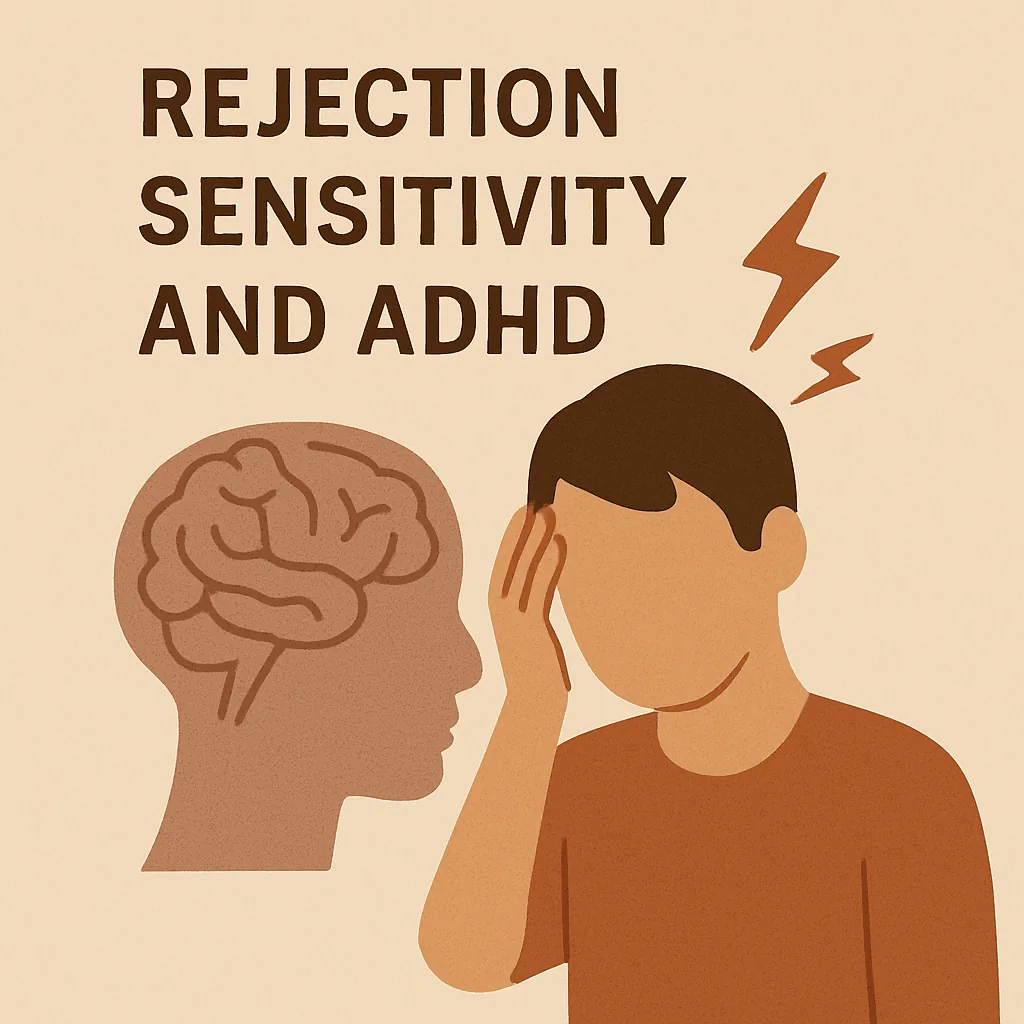
Rejection sensitivity is one of the least understood but most impactful components of ADHD. Many people associate ADHD with distractibility and poor focus, yet the emotional dimension of the condition can be far more disruptive to daily life than forgetfulness or impulsivity.
The emotional intensity that comes with ADHD is not a personality defect. It is a measurable neurological pattern that affects how the brain processes threat, reward, memory, and social information. When combined, these differences make the pain of criticism, disapproval, or perceived rejection feel sharper, faster, and more difficult to regulate.
This article explains the neuroscience behind rejection sensitivity, outlines why the ADHD brain responds the way it does, and describes how these responses can be retrained with structured, evidence-based techniques.
How ADHD Shapes Emotional Reactivity
Emotional reactivity in ADHD is not the result of being too sensitive. It originates from structural and functional differences in key brain regions responsible for threat detection, emotional regulation, cognitive control, and reward processing.
The Amygdala: The Emotional Alarm System
The amygdala evaluates emotional signals and identifies potential threats. In individuals with ADHD, the amygdala tends to activate more easily and more intensely. Research demonstrates stronger amygdala responses to negative or ambiguous social cues. This is why a shift in tone, a delayed message, or a neutral expression can trigger a surge of emotion.
The reaction is not exaggerated. It is a rapid, protective reflex.
The Prefrontal Cortex: The Regulator
The prefrontal cortex (PFC) provides reasoning, planning, and emotional control. ADHD is associated with reduced activation in this region and weaker communication between the PFC and the amygdala.
This creates a predictable pattern. The amygdala reacts first. The PFC attempts to regulate second. The emotional reaction arrives before the logical interpretation.
People often say they know their reaction is disproportionate, yet they still feel overwhelmed. Neuroscience explains this experience with clarity.
The Anterior Cingulate Cortex: The Social Pain Processor
The anterior cingulate cortex (ACC) processes emotional conflict and social distress. Studies show that social rejection activates the same neural pathways as physical pain, and ADHD brains show heightened ACC activity during these events.
This makes criticism feel physical, not only emotional.
Dopamine Imbalance and Emotional Stability
Dopamine regulates motivation, reward, and confidence. ADHD involves lower dopamine availability and irregular reward signaling. When dopamine levels are low, the emotional system becomes less stable.
Small criticisms feel more significant. Reassurance becomes more necessary. Confidence fluctuates rapidly.
This chemical imbalance increases the intensity of rejection sensitivity.
Working Memory Limitations and Loss of Context
Working memory allows the brain to hold information long enough to make sense of it. ADHD often involves weakened working memory, which means that during emotional moments, the brain cannot maintain perspective.
Instead of seeing events as temporary or limited, they feel absolute. This is why a small rejection can feel like a threat to an entire relationship or sense of identity.
How Rejection Sensitivity Develops Over Time
Rejection sensitivity is not created from a single moment. It develops over years of interaction between neurological traits and emotional conditioning.
Many individuals with ADHD grow up hearing variations of:
Pay attention Stop forgetting things Why are you not trying harder Why did you miss that What is wrong with you
Even when spoken with good intentions, these messages teach the brain that mistakes provoke disappointment. Over time, the emotional system begins to anticipate rejection before it happens.
The nervous system becomes hypervigilant, and the brain learns to scan for disapproval as a protective strategy.
The Emotional Loop in ADHD
The interaction of these systems creates a recognizable cycle.
A small trigger occurs The amygdala fires Cortisol rises Dopamine decreases The ACC registers social pain The PFC struggles to regulate Working memory collapses under emotion Flooding occurs Shame reinforces the reaction The brain stores the event as a threat
The next time a similar situation arises, the loop activates faster.
Understanding this cycle is the first step in interrupting it.
The emotional circuitry of the brain is not fixed. Neuroplasticity allows these pathways to be retrained. The amygdala can become less reactive. The prefrontal cortex can increase control. Dopamine patterns can stabilize. Confidence can become less dependent on external validation. Emotional reactions can become more predictable and manageable.
Here is how this retraining process works in practice.
1. Nervous System Regulation
Nervous system techniques calm the amygdala and reduce sympathetic activation. When the body settles, the emotional brain becomes more regulated.
Effective methods include:
Slow controlled breathing Somatic grounding Cold exposure Progressive muscle release Structured pauses before reacting
These practices are not wellness trends. They are physiological interventions that reduce emotional overreactivity.
2. Cognitive Reframing and Perspective Training
This strengthens the prefrontal cortex and reshapes the interpretation of emotional experiences.
Clients learn to:
Differentiate emotion from narrative Interrupt automatic negative predictions Challenge cognitive distortions Clarify ambiguous social cues Rebuild confidence based on evidence
The goal is not forced positivity. The goal is accurate thinking.
3. Controlled Exposure to Rejection Triggers
Avoidance increases sensitivity. Exposure reduces it. Gradual exposure retrains the amygdala through repeated evidence that the situation is not dangerous.
Examples include:
Sending a message without over-explaining Not apologizing unnecessarily Allowing others to be mildly frustrated Sitting with delayed responses Tolerating uncertainty without seeking reassurance
Each successful exposure reduces the intensity of future reactions.
4. Dopamine Stabilization Through Structure
Dopamine becomes more stable when daily life becomes more structured. Individuals with ADHD respond strongly to patterns, momentum, and completion.
Stabilizing dopamine involves:
Routines Task completion Physical activity Healthy reward cycles Predictable daily anchors
The more consistent the dopamine system becomes, the less extreme the emotional reactions become.
5. Identity Reconstruction
Years of criticism and misunderstanding can weaken self-concept. A fragile identity makes rejection more painful.
Coaching focuses on rebuilding a stable sense of identity through:
Clear values Internal validation Strength recognition Skill development Confidence building through action
As identity becomes stronger, rejection loses its emotional intensity.
Rejection sensitivity in ADHD is the result of specific neurological patterns interacting with lived experiences. Understanding these mechanisms removes shame and offers a clear path toward change.
With the right training:
Emotional regulation improves Triggers lose power Perspective expands Confidence strengthens Relationships become more stable The nervous system stops operating in survival mode
This is the foundation of the work I do as an ADHD and Anxiety Coach. By integrating neuroscience, cognitive restructuring, behavioral exposure, and nervous system regulation, clients learn to respond with clarity rather than fear.