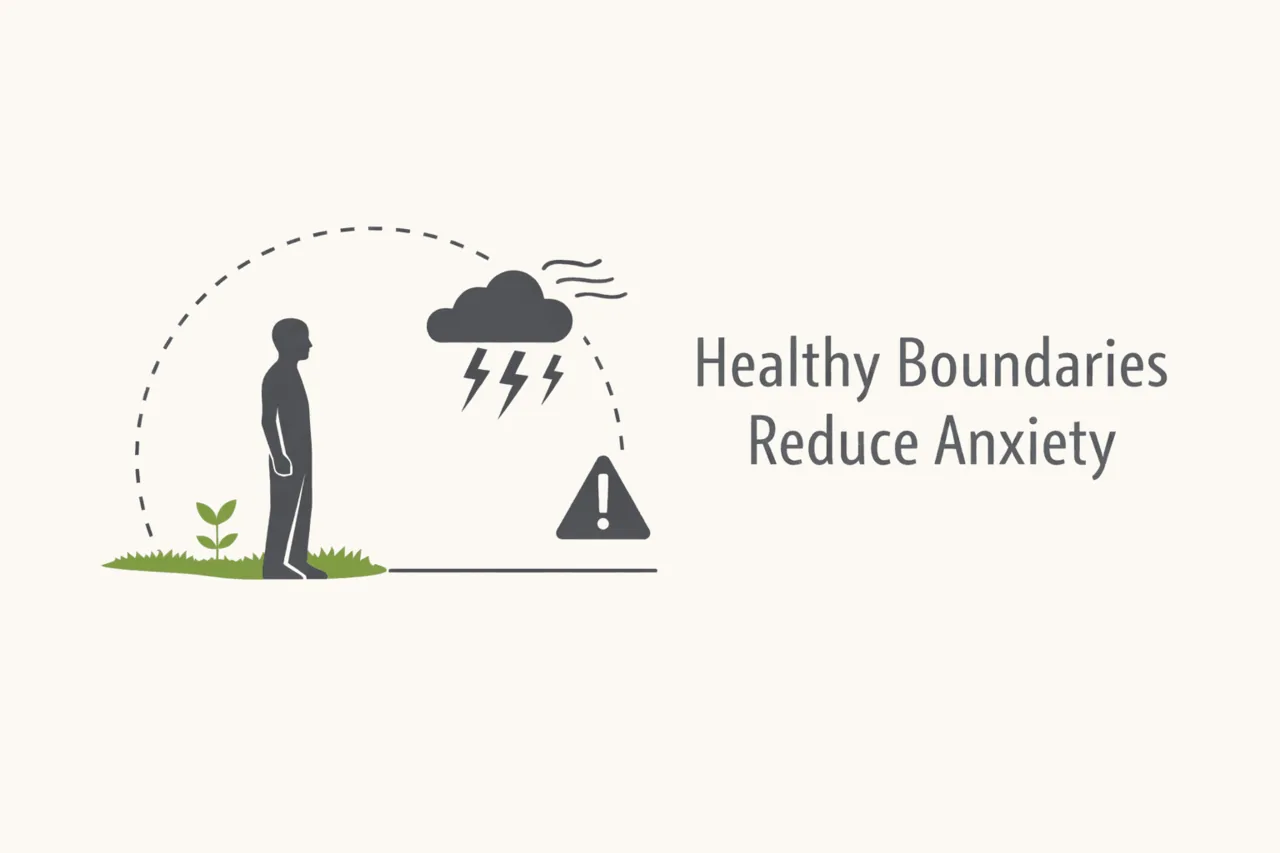
Most people think boundaries are about saying no more often or being “better at confrontation.” That’s not really it.
Boundaries are about responsibility. Specifically, understanding what is your responsibility and what is not.
We all have different types of relationships. Partners, spouses, children, friends, coworkers, family, neighbors, and acquaintances. Each relationship has different expectations, roles, and emotional dynamics. Whether you realize it or not, every one of those relationships operates under a set of rules.
Some of those rules are conscious. Many of them form automatically.
When boundaries are unclear or unhealthy, anxiety fills the gap.
Why Poor Boundaries Create Anxiety
A lot of anxiety comes from taking responsibility for things you cannot control.
Other people’s emotions. Other people’s reactions. Other people’s behavior. Other people’s happiness.
When you feel responsible for how others feel or act, your nervous system stays on high alert. You’re constantly monitoring, anticipating, and adjusting yourself to prevent conflict or disappointment.
That’s exhausting.
A core principle I use in anxiety coaching is what I call the law of relationships: You are responsible for what you think, feel, and do. Other people are responsible for what they think, feel, and do.
Once you blur that line, anxiety takes over.
Think about being given a task at work without the tools or authority to complete it. You’d feel stressed, overwhelmed, and frustrated. The same thing happens emotionally when someone hands you responsibility for their feelings or reactions.
Healthy boundaries clarify where your responsibility ends and where someone else’s begins.
Boundaries Are Built on Self-Worth
Setting boundaries isn’t just a communication skill. It’s tied directly to how you see your value.
If your sense of worth depends on being needed, approved of, or seen as helpful, boundaries will feel threatening. Saying no will feel like rejection. Discomfort will feel dangerous.
Your value is not based on your performance.
Think about how a parent loves a child. The child’s behavior might be frustrating at times, but it doesn’t change the parent’s love. That’s how self-worth is supposed to work. Stable, not conditional.
When your worth feels stable, boundaries become easier. You don’t need to earn approval by overextending yourself.
How to Start Identifying Your Boundaries
Boundary work starts with awareness, not confrontation.
Ask yourself:
-
Which relationships consistently bring me stress or anxiety?
-
Am I trying to manage someone else’s emotions or reactions?
-
Do I feel taken advantage of or resentful?
-
Does my sense of value change depending on how much I do for others?
-
Am I carrying responsibilities that aren’t actually mine?
Pay attention to guilt. Guilt is often the signal that an old boundary pattern is being challenged. Many people learned early on that saying no led to conflict, anger, or withdrawal. Those experiences shape how boundaries show up later in life.
Anxiety often comes from anticipating something bad happening and feeling like you have no healthy way to respond. Boundaries give you that response.
Communicating Boundaries Without Overexplaining
Unhealthy boundaries are usually reinforced by the belief that you can’t say no.
You can.
Saying no is not rude. It’s information.
Your yes only has meaning when your no is allowed to exist.
You don’t need to justify, convince, or overexplain. A calm, firm response is enough. And when someone repeatedly ignores your boundaries, the next step isn’t more explanation. It’s changing how you engage.
Boundaries aren’t about controlling others. They’re about controlling your participation.
Boundaries Get Easier With Time
At first, setting boundaries feels uncomfortable. Your nervous system isn’t used to it. You might feel selfish, anxious, or tense afterward.
That fades.
Over time, boundaries become habits. The pressure to please others decreases. Old resentment softens. Relationships either adjust or reveal where change is needed.
Checking in with yourself regularly helps keep boundaries intact, especially during stressful periods.
Ask yourself:
-
Does my schedule reflect my priorities?
-
Do my actions align with my actual responsibilities?
-
Am I moving toward my long-term goals?
-
Am I staying within my financial and emotional limits?
Clear boundaries support lower anxiety, better relationships, and a more stable sense of self.
You don’t need to control everything to feel safe. You need to know what’s yours to carry, and what isn’t.